
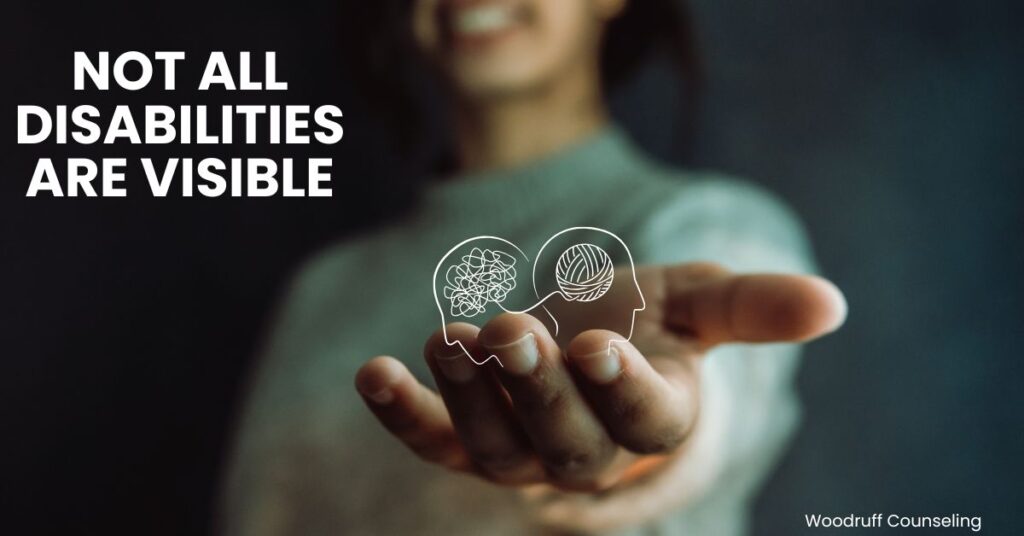
July is Disability Awareness Month, and I’d like to draw attention to something that often goes unnoticed: invisible disabilities, particularly those related to mental health.
Many of us have been raised to recognize disabilities that are visible. We may see someone using a wheelchair and recognize they have a mobility limitation, or notice a white cane or guide dog and understand that a person has a visual impairment. While these disabilities are important to recognize, many others cannot be seen at all.
You may not know that someone is deaf or hard of hearing. You may not realize that a person has a cognitive disorder, a processing delay, chronic pain, autism, epilepsy, or another condition that affects how they experience the world. Likewise, you cannot always tell when someone is living with a mental health condition that significantly impacts their daily life.
Because we cannot see every disability, it’s easy to make assumptions about another person’s experiences, abilities, or challenges. We may mistake someone for being rude, unmotivated, distracted, or uninterested when, in reality, they are navigating something we know nothing about.
Mental health conditions exist on a spectrum. While they are challenging for those who experience them, they are not always considered disabilities. For some individuals, however, a mental health condition substantially limits one or more major life activities and meets the legal or medical definition of a disability.
The distinction often comes down to how much a condition impacts daily functioning. Does it significantly interfere with a person’s ability to work? Does it make completing everyday tasks difficult? Does the individual require accommodations or additional support to participate fully in work, school, or community life? These are the kinds of questions that medical professionals, government agencies, and other organizations consider when determining whether a condition rises to the level of a disability.
For those living with a disabling mental health condition, the challenges extend far beyond simply “feeling stressed” or “having a bad day.” They may be working incredibly hard just to accomplish tasks that others complete without a second thought. Recovery and improved functioning are always important goals, and many people experience meaningful improvement with the right treatment and support. For others, the condition may remain a long-term disability that requires ongoing accommodations and understanding.
So, what can each of us do?
First, if someone chooses to share that they have a disability, be willing to listen. You don’t have to fully understand their experience to respect it.
Second, practice patience and compassion. If someone responds differently than you expect, consider the possibility that they may be managing challenges you cannot see. A little grace can make a significant difference.
Third, if you or someone you know is living with a disability, learn about the resources, accommodations, and legal protections that are available. No one should have to navigate those challenges alone, and asking for support is not a sign of weakness, it is often an important step toward living as fully and independently as possible.
Finally, remember that every person has something meaningful to contribute. Disability does not diminish a person’s worth, talents, or ability to positively impact their family, workplace, or community. Sometimes the path looks different, and sometimes additional support is needed, but every individual has inherent value. By creating communities that are more understanding, accessible, and inclusive, we allow everyone the opportunity to share their unique gifts.
The next time you encounter someone whose experience you don’t fully understand, remember this simple truth: not every disability is visible. Kindness, patience, and compassion are often the most meaningful accommodations we can offer.